“I Know I Need Help, But What Exactly Will They Do?”
You’re expecting or just had a baby in the United States. Friends and family are far away, maybe in another country. Your partner has limited parental leave. You’ve heard about postpartum helpers, but you’re not quite sure what they actually do all day.
“Is it worth the investment?” “Will they really help or just be in the way?” “What’s the difference between a postpartum helper and just having my mom visit?”
These are questions every new mother asks. The answer can make the difference between struggling through the fourth trimester alone and actually enjoying those precious first weeks with your newborn.
This article takes you through a real day with a professional postpartum helper — breaking down exactly what they do, how they support your recovery, and why mothers who’ve had this support say they couldn’t imagine doing it without.
Understanding the Role: More Than Just Baby Care
The Complete Support System
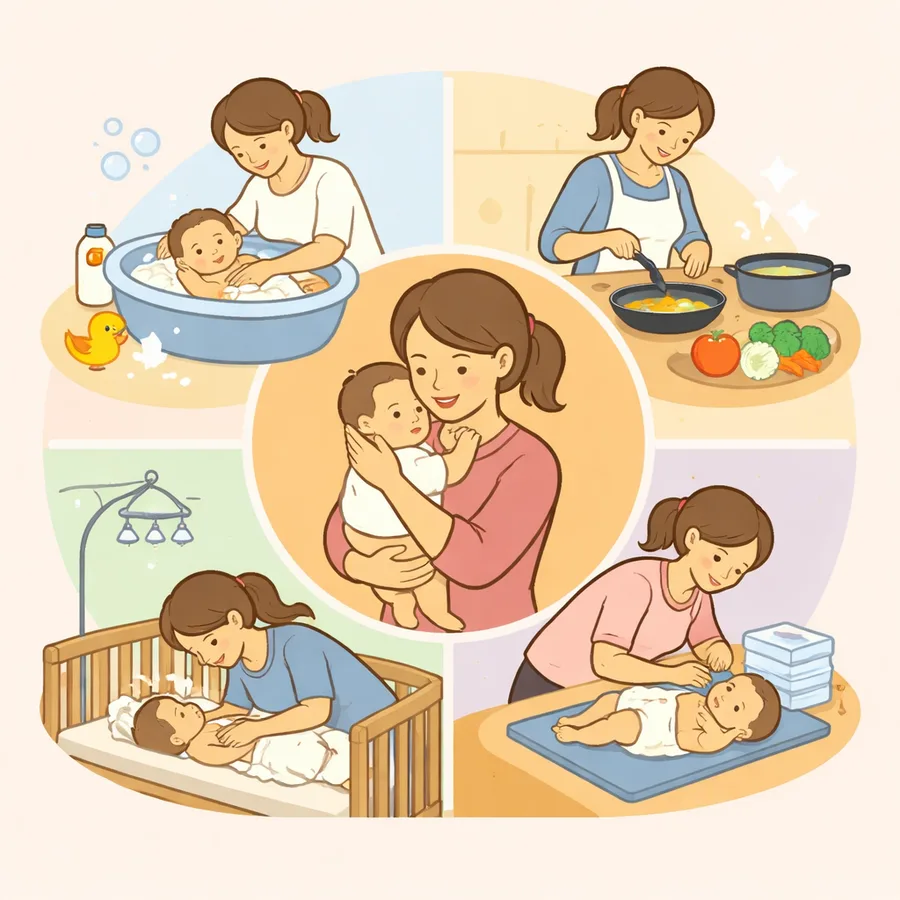
A professional postpartum helper (also called postpartum doula, newborn care specialist, or confinement nanny in some cultures) provides comprehensive support that goes far beyond just watching the baby.
🌟 Three Core Areas
- Newborn Care — Expert baby care and parent education
- Mother's Recovery — Supporting physical and emotional healing
- Family Adjustment — Helping the whole family adapt to new life
💡 What Makes Them Different from Family Help
- Professional training and certification
- Experience with dozens of newborns
- Objective, non-judgmental support
- Knowledge of current safety standards
- Focus on teaching you, not just doing for you
A Typical Day: 24-Hour Care
Morning (6:00 AM – 12:00 PM)
🌅 6:00–7:00 AM: Early Morning Care
- Takes baby for feeding (if bottle)
- Mother sleeps in or rests
- Changes diaper, checks baby's condition
- Monitors any overnight concerns
- Prepares formula if needed
☀️ 7:00–8:00 AM: Mother's Morning
- Assists mother with morning routine
- Brings breakfast to mother
- Supports breastfeeding if needed
- Checks mother's recovery status
- Provides emotional check-in
🛁 8:00–10:00 AM: Baby Care & Education
- Baby's morning bath (demonstrates technique)
- Teaches parents bathing skills
- Umbilical cord care
- Skin care and diaper cream application
- Tummy time activities
- Developmental observation
🏠 10:00 AM–12:00 PM: Household Support
- Prepares nutritious lunch for mother
- Baby laundry
- Sterilizes bottles and pump parts
- Tidies baby's room
- Grocery list preparation
“I thought I’d feel awkward having someone in my home, but by day two, I realized she wasn’t just helping — she was teaching me. Every diaper change was a lesson, every bath was training. By week three, I felt confident doing everything myself.” — Sarah, first-time mom, Los Angeles
Afternoon (12:00 PM – 6:00 PM)
😴 12:00–2:00 PM: Rest & Recovery Time
- Encourages mother to nap
- Cares for baby while mother rests
- Light meal preparation
- Monitors baby's feeding schedule
- Handles visitors (if any)
📚 2:00–4:00 PM: Active Learning
- Feeding education (latch, positioning)
- Swaddling techniques
- Soothing methods (5 S's)
- Reading baby's cues
- Sleep training basics
- Partner education if available
🌇 4:00–6:00 PM: Evening Prep
- Prepares dinner for family
- Final afternoon feeding
- Sets up overnight supplies
- Evening routine establishment
- Family bonding time support
Evening & Night (6:00 PM – 6:00 AM)
🌙 6:00–10:00 PM: Family Time & Night Preparation
- Supports family dinner and bedtime routine
- Cluster feeding support
- Final evening feeding and overnight diaper change
- Swaddling for sleep, room environment check
🌃 10:00 PM–6:00 AM: Overnight Care
- 2–3 night feedings
- All diaper changes
- Soothing and settling
- Monitoring baby's health
- Tracking feeding times
- Mother sleeps through (or wakes only to nurse)
What This Means for Parents
- Mother gets 6–8 hours of sleep
- Father can sleep through to go to work refreshed
- Baby expertly cared for all night
- Parents wake up rested and ready for the day
Specialized Tasks: The Expert Touch
Newborn Care Expertise
🍼 Feeding Support
- Breastfeeding positioning and latch
- Pumping schedule and storage
- Formula preparation and sterilization
- Tracking intake and output
- Identifying feeding problems early
- Paced bottle feeding technique
😴 Sleep Training Foundation
- Establishing day/night distinction
- Safe sleep environment
- Age-appropriate wake windows
- Sleep cue recognition
- Gentle sleep associations
- Gradual routine building
🩺 Health Monitoring
- Jaundice observation
- Diaper output tracking
- Weight gain monitoring
- Umbilical cord healing
- Temperature checks
- When to call the doctor
🌱 Developmental Activities
- Tummy time
- Age-appropriate stimulation
- Bonding activities
- Sensory development
- Motor skill support
Mother’s Recovery Support
💪 Physical Recovery
- Monitoring healing (C-section or vaginal)
- Nutritious meal preparation
- Hydration reminders
- Rest enforcement
- Gentle activity encouragement
- Recognizing complications
💛 Emotional Support
- Active listening
- Validation of feelings
- Postpartum mood monitoring
- Anxiety reduction techniques
- Confidence building
- Partner communication support
📖 Practical Education
- Postpartum body changes
- Self-care techniques
- Pelvic floor exercises
- Nutrition for recovery
- When to seek help
Household Management
✅ What's Included
- Baby's laundry
- Bottle sterilization
- Nursery organization
- Baby supply inventory
- Light meal preparation
- Kitchen cleanup (baby-related)
❌ What's Usually Not Included
- Family's laundry
- Deep house cleaning
- Grocery shopping (may assist)
- Older children's full care
- Pet care
Scope of household help varies by contract. Discuss expectations upfront.
Different Service Models
🏠 Live-In 24-Hour Care
- Best for: First-time parents, C-section recovery, twins, no family support nearby, parents returning to work early
- Schedule: Lives in your home, on-call 24 hours, one day off per week, 2–8 weeks duration
- Cost: $350–$600/day
☀️ Day Shift Only (8–12 hours)
- Best for: Partner available at night, breastfeeding mothers who want night bonding, smaller homes, budget considerations
- Cost: $200–$350/day
🌙 Night Shift Only (8–10 hours)
- Best for: Parents managing during the day, recovering from a difficult birth, demanding jobs, extreme sleep deprivation
- Cost: $250–$400/night
⏰ Part-Time Support
- Best for: Budget-conscious families, gradual transition to independence, specific education needs, experienced parents
- Cost: $30–$60/hour
What Makes Professional Help Worth It
👨👩👧 Family Help Often
- Does things for you
- May use outdated methods
- Can create dependency
- Sometimes brings judgment
- May contradict your partner
⭐ Professional Helper
- Teaches you to do things yourself
- Uses current evidence-based practices
- Builds your confidence
- Provides objective support
- Strengthens partner teamwork
“After 2 weeks with our helper, I felt like I’d attended a masterclass in baby care. She didn’t just do things — she explained why, showed me alternatives, and let me practice while she was there to guide. When she left, I was ready.” — Michelle, NYC
“I had a C-section and couldn’t imagine how I’d manage. Having someone handle night care meant I actually slept and healed. At my 6-week checkup, my doctor was amazed at my recovery.” — Jennifer, Chicago
“The helper saved our marriage. Instead of fighting about who’s more tired or who should get up, we both slept. We bonded with our baby during the day when we were rested.” — David, father, Seattle
“I was spiraling into postpartum anxiety. Having an expert there 24/7 meant I never had to panic about ‘Am I doing this right?’ She caught my anxiety early and helped me get support before it became serious depression.” — Amanda, San Francisco
Cultural Adaptations: Korean-Style Postpartum Care
Many Korean-American families seek helpers who understand traditional postpartum care (산후조리) while adapting to American life.
🍲 Korean-Style Elements
- Seaweed soup (미역국) daily
- Warm foods emphasis
- Avoiding cold water
- Special attention to keeping warm
- Extended rest period
- Focus on milk production
- Traditional massage techniques
🔬 Modern Adaptations
- Evidence-based safety standards
- American pediatrician guidelines
- Partner involvement
- Gradual activity increase
- Balanced with Western medicine
🌐 Bilingual Support
- Explains practices to English-speaking partners
- Communicates with American doctors
- Bridges cultural expectations
- Respects both traditions
“I’m Korean, my husband is American. Our helper understood both worlds. She made traditional seaweed soup for me while explaining to my husband why it mattered. She used safe sleep practices that satisfied him while respecting my cultural needs. She was the perfect bridge for our family.” — Sarah Kim-Anderson, Seattle
Special Situations
👶👶 Twins or Multiples
- Often two helpers recommended
- Specialized multiple feeding schedules
- More intensive parent training
- Longer recommended duration
- Typical cost: 1.5–2x single baby rate
🏥 Premature or Special Needs Babies
- Look for NICU nurse background
- Preemie specialist certification
- Medical training preferred
- Higher qualifications come with higher cost
💊 Postpartum Complications
- Monitors mother's symptoms
- Ensures medication compliance
- Prepares therapeutic diet
- Recognizes warning signs
- Coordinates with healthcare providers
Red Flags: When Your Helper Isn’t Doing Their Job
🚨 Baby Care Issues
- Leaves baby unattended
- Ignores crying for extended periods
- Doesn't track feedings or diapers
- Rough handling
- Skips safety protocols
⚠️ Mother Care Issues
- Dismissive of your concerns
- Doesn't encourage rest
- Criticizes parenting choices
- Creates dependency instead of teaching
- Shares your private information
📋 Professional Issues
- Frequently on personal phone
- Leaves duties undone
- Shows up late regularly
- Doesn't communicate clearly
If you notice these issues: document them, communicate concerns directly, contact the agency if applicable, and don’t hesitate to request a replacement.
Maximizing Your Helper’s Impact
📝 Before They Start
- Written job description
- Daily schedule outline
- Household rules
- Dietary preferences
- Cultural practices to follow
- Emergency procedures
Transition Plan:
Week 1
Heavy helper involvement, parents observe and learn
Week 2
Parents take primary role during day, helper guides
Week 3
Parents mostly independent, helper supervises
Week 4
Helper only intervenes when needed
Goal: Confident, independent parenting after helper leaves
Cost vs. Value
4-Week Live-In Care: $10,000–$16,000
What you get: 672 hours of expert care, 4 weeks of education, 200+ diaper changes, 100+ supervised feedings, mother’s complete recovery, father’s work productivity maintained, relationship stress prevented, lifelong parenting skills.
For comparison:
- Postpartum facility: $15,000–$25,000 for 2 weeks only
- Emergency room from exhaustion: $1,000+
- Marriage counseling: $200/session
- Mental health treatment: $150–$300/session
Check if eligible for: FSA/HSA funds, Dependent Care FSA, employer benefits, medical deduction if prescribed.
“When I divided the cost by hours of help, education, meals prepared, and peace of mind, it came out to less than I spend on my daily latte habit over a year. Except this investment changed my entire life trajectory as a parent.” — Anonymous survey response
Finding the Right Helper
✅ Must Have
- CPR certified (current)
- First Aid trained
- Newborn care certification
- Background check completed
- References verified
- Legal work authorization
💬 Interview Questions
- How many babies have you cared for?
- What's your teaching philosophy?
- How do you handle a baby who won't stop crying?
- How do you support breastfeeding mothers?
- What's your experience with Korean-style postpartum care?
The Bottom Line
A postpartum helper does so much more than the tasks on a checklist. They provide expertise, education, support, and peace of mind during one of life’s most challenging transitions.
The fourth trimester is just as important as the nine months before it. You prepared for pregnancy and birth — prepare for postpartum too.
You deserve support. Your baby deserves a rested, confident parent. Your family deserves a strong start.
Contact 맘헬퍼 USA (Mom Helper USA) for a free consultation — no pressure, no obligation.
Was this helpful? Share with other expecting parents who might benefit from understanding professional postpartum support.
- postpartum helper
- postpartum doula
- newborn care
- postpartum support